

No matter how diligent you are, medical expenditures keep stacking up, and it’s fair to wonder if the deluge of new health apps, wearables, and hospital software genuinely affects that calculation or just adds another price.
The honest response is that technology can save expenses, but only in particular, measurable ways, not through nebulous promises of “innovation.” Some technologies do really cut spending for patients and the system. Some appear good and don’t move the needle much, or silently add cost. Knowing the distinction is what enables you to use these tools properly, rather than ignoring them or overpaying for them.
In this guide, we will look at where healthcare dollars are really spent, then go through specific technologies that have been demonstrated to minimize that waste, the true numbers behind them, and where these tools fall short. By the conclusion, you’ll have a clear, grounded view of how technology bends the cost curve, and how you can use it to bring down your own spending.
First, Understand Where the Money Actually Goes
You first have to discover where healthcare expenditures disappear to see how technology helps, because the biggest savings come from tackling the biggest sources of waste.
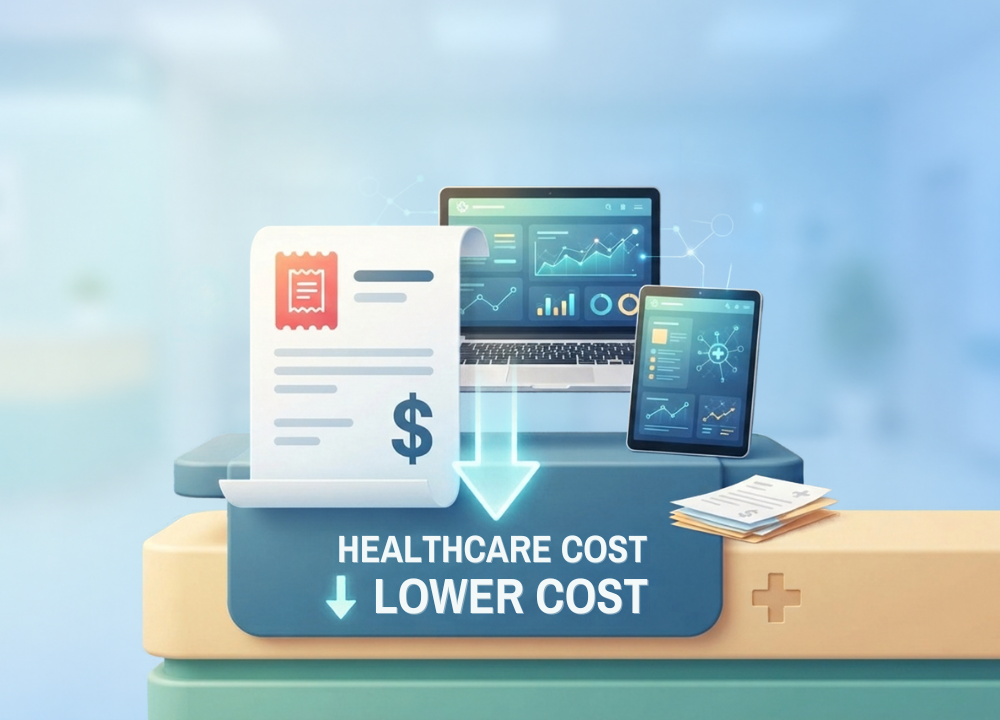
A startling amount of spending has nothing to do with treatment at all. A huge chunk of every health-care dollar is being spent on administrative tasks including billing, insurance claims, prior authorizations, and paperwork. Health Affairs research suggests that administrative activity accounts for 15 to 30 percent of overall U.S. healthcare spending, or hundreds of billions of dollars per year. Wasteful administrative spending alone is in the hundreds of billions per year, even by modest estimates.
The second big leak is avoidable care. It costs a lot more to treat preventable emergency room visits, redundant testing, and recurrent hospital stays than it does to discover a problem early or manage it at home. The emergency department is the most costly place to treat a regular problem, yet often individuals end up there because they didn’t get the proper care at the right time.
Technology strikes back at leaks immediately. On one side, it reduces paperwork, and on the other side, it automates back-office repetition. On the other, it identifies health issues earlier and directs them to cheaper, more appropriate care. Everything else in this guide falls into one of those two groups.
How Technology Quietly Shapes Your Everyday Health Choices
That’s before the major system-level savings, but it’s worth seeing how technology already influences the small choices you make every week, because those small choices add up to real money.
A wearable that alerts you to an abnormal heartbeat prods you to see a doctor earlier than you would have on your own, which can mean catching something when it’s still cheap to cure. A medication reminder tool helps you remain on track with your prescription and avoid the missed doses that so often snowball into a costly hospital admission. Even a symptom checker influences an earlier decision: whether something is worth a same-day emergency visit or can wait for a routine appointment.
Each of these is a tiny nudge, but having the proper level of care at the right time is one of the biggest hidden levers to cut spending. One averted emergency department visit can save you hundreds or thousands of dollars. Technology to help you make that call is silently doing financial work long before any hospital system gets involved.
The Technologies That Actually Cut Costs
Some tools have evolved past the hype and are now providing tangible proof of reduced expense. Each tackles a different aspect of the pricing issue, and understanding what each truly achieves makes it easy to decide which are worth your attention.
Telehealth: Steering Care Away From Expensive Settings
Telehealth is one of the most obvious cost reductions in the entire system, largely because of where it shifts care. In acute care, cost studies show that a telehealth visit is roughly $40 to $50, vs. $136 to $176 for an in-person acute care visit in a clinic or urgent care center.
That price differential is especially significant when a virtual visit keeps someone out of the emergency room, where the same common problem can cost several times more. A video visit typically can address a small infection, rash, or drug query for a fraction of the cost and without travel or time off work.
Telehealth also seems to get individuals to care earlier. When you can see a provider as easily as opening an app, little concerns are taken care of before they become expensive ones. The savings are substantial, but they are only real, as explained in the limitations section below, if the virtual visit truly replaces an in-person visit and does not add to it.
Remote Patient Monitoring: Catching Trouble Before Admission
Remote patient monitoring involves the use of wearable sensors and equipment at home to monitor vital indicators such as blood pressure, blood sugar, or heart rhythm, and the data goes directly to a care team. The idea is to identify a problem early enough to prevent a hospital admission.
This is notably important for persons with chronic diseases, who make up a big share of hospital spending. A remote care team can see those figures and call a patient, change a medication, or schedule an appointment days before a crisis arises. We’ve seen several health systems that have conducted these programs for high-risk patients and seen considerable drops in hospitalizations. And since an averted admission is one of the most expensive occurrences to prevent, even slight reductions translate into big savings.
The best results are usually in illnesses such as heart failure, where slight changes in weight or blood pressure can be an early warning of problems. Remote monitoring pays for itself by keeping those patients stable at home, rather than having to readmit them over and over.
Electronic Health Records: Ending Duplicate Tests
Doctors no longer need to repeat lab tests and scans that have been carried out elsewhere when they have a comprehensive patient history at their fingertips. This may seem trivial, yet duplicate testing is a known, frequent cause of waste, especially when a person consults multiple specialists who cannot access each other’s notes.
Shared digital records solve this by making previous outcomes visible on the spot. Instead of ordering a blood test or an MRI again “to be safe,” a physician can pull up the existing result and jump straight to a decision. The test saves the patients the time, the hassle, and the occasional risk of unneeded operations, as well as the cost of the test itself.
The more records are linked across different hospitals and clinics, the greater the savings. The more of a patient’s history that travels with them, the less money is burned repeating work that has already been done.
AI and Automation: Cutting the Paperwork Mountain
Administrative work is the largest single pool of unnecessary spending in healthcare, and hence the biggest opportunity for automation. Software can increasingly manage large amounts of repetitive work in billing, claims processing, and prior authorization.
The potential scale here is really big. A widely cited analysis by researchers at McKinsey and Harvard estimated that more widespread use of AI could save the U.S. healthcare system between $200 billion and $360 billion a year, or about 5 to 10 percent of total spending, much of it by automating administrative tasks and avoiding avoidable admissions. That analysis was published in peer-reviewed form as a working paper of the National Bureau of Economic Research.
“In reality, organizations which have automated some billing and claims workflows have realized actual reductions in administrative labor for those workflows. Savings don’t always come right away and require proper configuration, but the trend is clear: the more the paperwork machine is automated, the less money it drains.
Predictive Analytics: Treating Problems Before They Explode
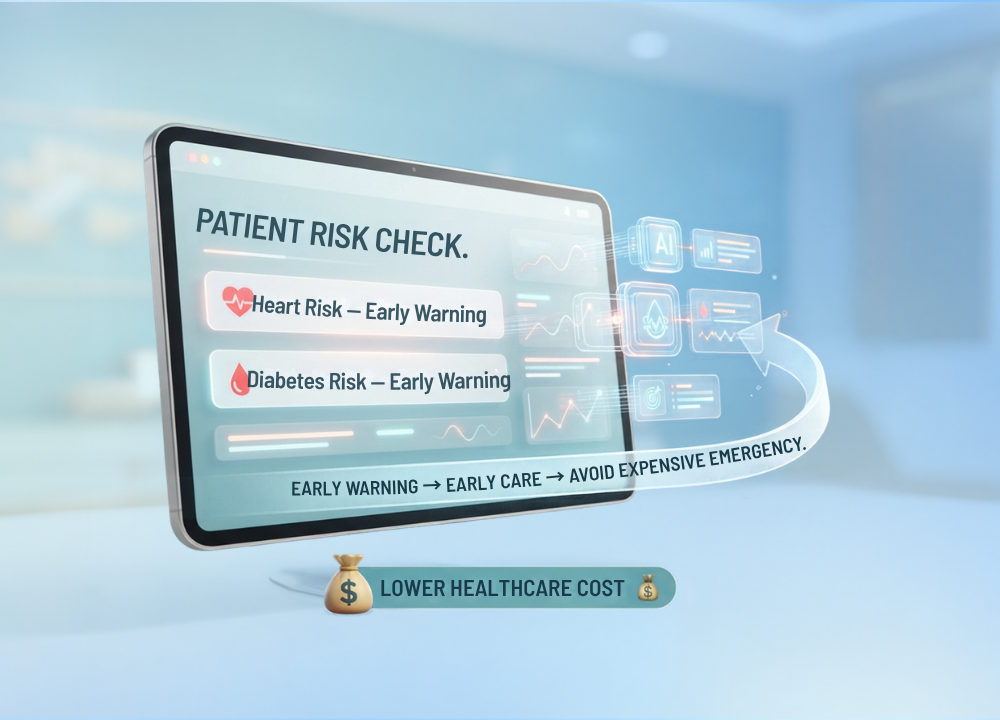
Predictive analytics software scans patient data for early warning indications, such as a rising risk of diabetes, heart disease, or hospital readmission. If care teams can identify those people early, they can intervene when therapy is easy and inexpensive.
This is the rationale behind most of value-based care, where it costs less to keep people well than it does to treat them when they are sick. These tools allow us to find high-risk patients and intervene sooner so we don’t have to pay for the pricey emergencies that occur from allowing a problem to silently become worse. Finding a problem months ahead usually costs much less than dealing with the same problem when it becomes a crisis.
The strategy works best when the predictions themselves spur action. A risk score doesn’t change anything. It only saves money when a care team uses it to reach out, adjust therapy, or arrange a timely visit.
A Simple Way to See What Each Tool Targets
It’s useful to examine them side by side as each solution addresses a distinct source of waste. The table below outlines what each one accomplishes and where its savings are derived from.
| Technology | Main Cost It Attacks | How It Saves Money |
| Telehealth | Expensive in-person and ER visits | Replaces costly visits with cheap virtual ones |
| Remote monitoring | Hospital admissions and readmissions | Catches problems at home before they escalate |
| Electronic records | Duplicate tests and scans | Makes prior results instantly visible |
| AI and automation | Administrative and billing waste | Automates repetitive back-office work |
| Predictive analytics | Preventable emergencies | Flags high-risk patients for early action |
There is no silver bullet for the cost issue. In combination, they are worth it so that each one attacks a distinct portion of the trash at the same time.
Where Technology Falls Short on Saving Money
All of this is not automatic, and the honest recognition of where this will fail is what distinguishes hype from reasonable expectations. Tools can fail, and knowing how you use them helps avoid the pitfalls.
The most typical problem is technology that creates a step instead of removing one. A telehealth visit only saves you money if it solves the problem. If it only results in a second in-person appointment for the same problem, it’s an additional expense, not a cut. The same applies to monitoring equipment that emits alarms that no one ever responds to.
A real limit again is uneven access. The big hospital systems with lots of money can afford to do automation and monitoring right, and the savings go there first. Smaller clinics do not have the cash, people, or technical help to put up these technologies properly; therefore, the benefits are sluggish and patchy.
And last, every new technology has its own upfront cost and a learning curve. Hardware costs, staff training, and software integration require time and money, and the savings from tools such as remote monitoring or AI billing usually show up months later, not on the next bill. A product that can save money over the course of two years can nevertheless feel like a pure expense in month one, and that trips up firms who want fast returns.
Practical Takeaways for Patients and Providers
The proof is in the pudding: Technology bends the cost curve when utilized correctly, even if it won’t address healthcare costs by itself. What matters is to put it where the trash really is.
Patients can easily perform beneficial movements. For really minor non-urgent conditions, try telemedicine instead of reverting to urgent care or the ER. Follow any medication reminders or monitoring tools your care team sends you. Preventing one hospital trip is worth more than virtually any other savings. And take that advice seriously when a symptom checker or app helps you figure out if something can wait for a regular checkup, because that’s where most personal savings come from: picking the correct level of treatment.
The biggest wins for providers and hospital systems are going after the most wasteful areas first. The clearest benefits are in administrative automation and reducing unnecessary emergency visits, so focus on those before pursuing every shiny new toy. That’s when technology becomes a true cost reduction, and not just an expense. Focus on the use cases you know will save you money, not the ones that are unproven and spread you too thin.
Frequently Asked Questions
Does telehealth really save money?
Yes, most of the time, as long as the virtual visit replaces a more expensive in-person one. A telehealth visit costs $40 to $50 on average compared with $136 to $176 for acute care in person, and the savings increase when it prevents a trip to the emergency room. It only stops saving money if it creates a repeat in-person visit for the same problem.
What is the single biggest way technology lowers healthcare costs?
The biggest opportunity is to cut administrative waste. In the US, billing, claims, and paperwork are projected to account for 15 to 30 per cent of all healthcare spending. So automating those operations is an attack on the single biggest pool of preventable expense in the whole system.
Can wearables and home monitoring actually reduce my bills?
Mostly they can, by avoiding pricey hospital stays. For persons with chronic diseases, gadgets that pick up an early warning sign allow a care team to respond before a modest problem becomes an admission, one of the most expensive events to avoid. The advantage relies on someone actually doing something with the data the device sends.
Will AI make healthcare cheaper for ordinary patients?
Yes, probably eventually, but not directly at first. The highest potential savings — $200 billion to $360 billion a year, according to McKinsey and Harvard experts — come primarily from automating administrative work and avoiding preventable care. Those system-level reductions take years to flow through to patients’ costs, but the trend is down.
Why hasn’t technology already fixed healthcare costs?
Savings depend on proper use, not just adoption. Tools increase expense when they duplicate care; smaller clinics generally can’t afford to implement them efficiently, and every new system has startup costs that take months to pay back. Technology can help bend the curve, but only when it is precisely focused on the real sources of waste.
The Bottom Line
Technology alone won’t fix the healthcare cost problem, but research suggests it may dramatically cut spending when it’s implemented in the right places. But the biggest savings are not the sexiest: reducing administrative paperwork, reducing hospitalizations that don’t need to take place, reducing duplicative tests, making sure individuals are under less expensive and appropriate care.
For you as a patient, the practical route is clear. Utilize telemedicine for small conditions, be consistent with monitoring and reminders, and use the tools that help you choose the correct level of care.” On a bigger scale, the lesson is the same for the overall system. Go after the biggest sources of waste first, anticipate savings to accumulate over months rather than appear quickly, and the curve keeps curving in the right direction.
Pingback: How Smart Home Technology Will Change Lives? - Tech Journey Flow
Pingback: How Future Healthcare Technology Is Elevating At Home Care - Tech Journey Flow