
Sometimes, lethargy that comes out of nowhere, or a test report with a figure that’s a little off, arrives with no real warning. The sickness causing them may have been quietly growing for years by the time the symptoms can no longer be ignored. That silent interval between the initial cellular alteration and the first obvious symptom is exactly what makes chronic disease so deadly, because disorders like heart disease, cancer, and diabetes rarely present themselves early.
The scope of the problem is greater than most people understand. According to the CDC, around six in ten persons in the United States have at least one chronic disease and about four in ten have two or more at the same time. Waiting for symptoms to show up makes therapy more costly, delayed, and often less effective than if the issue had been picked up earlier.
The good news is detection technology has come on in leaps and bounds. Now, wearables, new blood tests, home kits and sophisticated algorithms can detect warning signals long before a person feels ill. This book dissects the most promising tools for early chronic disease detection, how they function, what they can and can’t achieve, and how to use them responsibly with normal medical care.
Why Catching Disease Early Changes Everything
Every chronic disease has a time window in which treatment is most effective, and that window usually opens well before symptoms appear. Catch a tumor early enough to prevent it from spreading beyond its original site, and the prospects of survival go up dramatically vs. a late-stage diagnosis. The same logic underpins the need for early detection across the board.
Diabetes is an obvious example. Sometimes blood sugar in the prediabetes range can be turned back to normal by changing diet and activity levels, thereby preventing type 2 diabetes from ever developing completely. Heart disease is similar in that controlling blood pressure and cholesterol early can avoid a heart attack years down the road. Early action not only improves results but can transform the entire trajectory of a person’s health.
Cost is part of the story, too. The expense of treating an advanced illness, frequently from a hospital bed, greatly exceeds the cost of treating a mild case with medication and simple lifestyle changes. It’s that mix of improved results and reduced cost that is exactly why there is so much research and money going into detection science currently, with researchers even working on blood tests that might identify illnesses such as Alzheimer’s disease far before memory issues begin.
Wearable Devices That Monitor Your Body Around the Clock
Wearable tech has evolved beyond simple step counting. Modern gadgets track heart rhythm, blood oxygen, skin temperature, sleep quality, and stress patterns throughout the day and night, creating a constant stream of data. The major breakthrough is the ongoing monitoring. That helps algorithms detect tiny variations that one annual examination would likely miss.
Smartwatches and Irregular Heart Rhythm
Many smartwatches now use optical sensors and electrical measurements to detect irregular heartbeats, including atrial fibrillation or AFib. This is of huge importance since AFib often doesn’t cause any symptoms until it results in a stroke. A watch that discreetly alerts an abnormal rhythm and encourages its wearer to visit a doctor could detect the condition while it is still treatable, reducing the long-term risk of both stroke and heart failure.
Some devices also monitor blood oxygen levels while you sleep, which might be a sign of sleep apnea. That connection matters on its own, because untreated sleep apnea over time increases your risk for high blood pressure and catastrophic heart events. But it’s vital to be clear on the limits: a smartwatch is giving you an alert, not a diagnosis. Any flag it raises needs to be confirmed by a medical specialist.
Continuous Glucose Monitors and Hidden Insulin Resistance
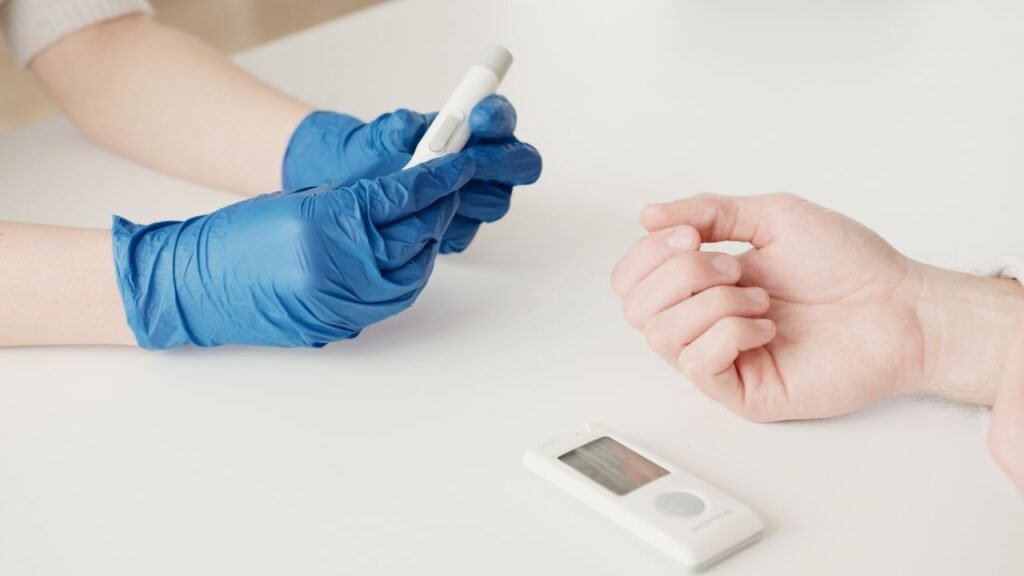
A continuous glucose monitor, or CGM, is a small sensor that sits under the skin and measures blood sugar every few minutes. At first, it was for those who already had diabetes, but now doctors are using it to find prediabetes and insulin resistance earlier.
The significance of a CGM is that it indicates in real time how blood sugar actually responds to particular meals, stress, bad sleep, and activity. That dynamic picture is typically a precursor to growing insulin resistance long before a simple one-time fasting blood test would pick it up. Catching it early enables a person to change their diet and activity, and many people totally turn prediabetes around before it ever develops into full type 2 diabetes.
AI-Powered Imaging and Diagnostic Tools
Radiologists view vast numbers of scans each year, and real fatigue is an inevitable concern in that sort of high-volume employment. Now, artificial intelligence helps by looking at CT images, mammograms, and MRIs, as well as human doctors, to indicate trends that sleepy eyes might miss.
It is vital to recognize that these tools are designed to assist radiologists, not replace them. In this way, an AI system is like a second set of eyes trained on millions of historical photographs to flag spots that might indicate early-stage cancer or organ damage so a human expert can inspect them more closely.
Catching Smaller Details, Faster
One of the strengths of well-trained imaging algorithms is the capacity to see very small or subtle abnormalities, including tiny lesions that are especially difficult for the human eye to see in thick breast tissue. Repeated studies of AI-assisted mammography reading have demonstrated that the combination of the technology with a radiologist can lead to better detection of early tumors than the radiologist alone.
The other big advantage is speed, which is the most important in busy hospitals. A preliminary AI flag now arrives within minutes, whereas a scan used to sit in a queue for days, giving doctors a head start on instances requiring urgent treatment. A smart algorithm and an experienced human reviewer are likely to do better than either one alone.
Predictive Software Running Inside Hospital Records
Many hospitals’ electronic health record systems now have a quieter type of AI running in the background. The predictive software keeps tabs on vital signs, lab findings, and clinical notes to spot patients who might be heading for a health catastrophe, sometimes hours before their condition would typically trigger worry.
Such an early warning can allow you crucial time to intervene before a chronic disease becomes an emergency. Like imaging technologies, these systems are best utilized as a supplement to human judgment, not a substitute. And the doctors evaluate and verify each flag before changing a patient’s care, keeping the technology in a supporting role, as it should be.
Blood Tests That Detect Disease Before Symptoms Appear
A regular blood sample can now hunt for molecular markers of disease, far beyond the typical cholesterol and blood sugar tests. These new tests look for snippets of genetic material or proteins released by damaged or diseased cells, picking up signals that older tests could not detect.
Liquid Biopsy and Circulating Tumor DNA
A liquid biopsy screens for circulating tumor DNA in the blood – small fragments of genetic code shed by cancer cells. The test itself is based on a blood sample, making it significantly less intrusive than a surgical tissue biopsy and repeatable to monitor changes over time.
The promise of this technique may be clearly shown in research into pancreatic cancer, which is particularly important because pancreatic cancer is often diagnosed only after the cancer has metastasized. Reporting from the Association of American Medical Colleges, a blood test developed at Oregon Health and Science University properly identified healthy people approximately 98 percent of the time and discovered roughly 73 percent of genuine pancreatic cancer patients. Doctors also use liquid biopsies to follow patients who have already been treated, to find the early signals that a cancer may be returning, as well as to detect it first.
Multi-Cancer Early Detection Tests
Multi-cancer early detection (MCED) assays aim to find signals tied to several different cancer types at once, in a single blood sample. A few variants are offered commercially in the United States.
These techniques are not designed to replace proven screening tests like mammography and colonoscopies. Instead, they offer an additional layer of protection, especially useful for malignancies that have no standard screening test at all. That said, their reliability is still being explored, and accuracy varies widely depending on the type of cancer and how advanced it is. The best way to think of them is as a promising adjunct to regular screening not as a stand-alone answer.
Genetic and Molecular Screening
Genomic testing examines a person’s DNA for genetic changes that are associated with disease. A single sample of saliva or blood can show an increased risk for various malignancies, heart diseases, or metabolic disorders, providing an individual with information they can use long before any symptoms would develop.
This is fundamentally different than a standard blood test, which offers a snapshot of what is happening in the body right now. DNA doesn’t change from day to day, so a genetic screen tells you about the risks you were born with, not the state of your health now. The finest thing is the combination of the two kinds of information; a known genetic risk along with lifestyle factors gives a far clearer picture than either alone. Take someone with a family history of heart disease. Genetic understanding allows them to start screening earlier and more regularly.
Genetic counseling is a vital companion to this type of testing. The skilled counselor helps to convert a raw and often complex genetic report into clear, practical recommendations. This keeps the material useful rather than scary.
At-Home Testing Kits and Remote Monitoring
You don’t have to go to a clinic for every health check now. But now at-home kits can test for kidney function, thyroid hormones, and even early colon cancer signs using a stool sample, giving consumers the ability to monitor important markers from home between doctor’s sessions.
For those with chronic diseases, remote patient monitoring takes this concept to the next level. Linked gadgets such as blood pressure cuffs and smart scales can communicate information directly to a care team so troubling changes are promptly spotted. This is especially helpful to individuals with chronic kidney disease, heart failure, or high blood pressure, when a sudden weight increase or jump in blood pressure might be detected within a day versus waiting for the next scheduled visit.
The tradeoff you need to be aware of: home tests aren’t always as accurate as a professional lab. Most manufacturers suggest that any result that is worrying should be confirmed with a full clinical follow-up, which is really the correct thing to do. Home tools are an early warning, not the last word.
Comparing the Main Detection Technologies
It’s good to view them side-by-side, because each tool is for a distinct purpose. The table below summarizes what each targets and its main limitation.
| Technology | What It Helps Detect | Main Limitation |
| Smartwatches | Irregular heart rhythm, possible sleep apnea | Produces alerts, not diagnoses |
| Continuous glucose monitors | Prediabetes, insulin resistance | Best interpreted with medical guidance |
| AI imaging tools | Early-stage cancers, organ damage | Supports, does not replace, radiologists |
| Liquid biopsy | Certain cancers, cancer recurrence | Accuracy varies by cancer type |
| Genetic screening | Inherited disease risk | Shows risk, not current disease |
| At-home kits | Kidney, thyroid, colon markers | Less precise than a lab |
No one tool solves the complete problem. What really matters is using the proper ones in combination, tailored to a person’s particular risk factors.
What to Keep in Mind Before Relying on These Tools
As valuable as these technologies are, none of them is flawless, and a few cautions are worth keeping in mind. False alarms happen rather often. A wearable can identify an abnormal heartbeat that a doctor checks and finds to be benign, which can cause unneeded stress if the person interprets the warning as a diagnosis.
Cost and access are genuine impediments, too. Many of the newest blood tests and genetic panels are not fully covered by insurance, so some people can’t afford them. Privacy is another problem that grows with the movement of more and more health data through applications and cloud servers. It’s sensible and wise to ask any company how they retain and distribute personal health information before you sign up.
The key premise is this: these technologies perform best as an early warning system, not as a final diagnosis in and of themselves. Any abnormal result still has to go in front of a doctor who can arrange the needed additional testing and put the result into correct context.
Where Early Detection Technology Is Headed
In the next several years we’ll likely see cheaper and more accurate versions of just about every tool discussed here. Blood tests for illnesses formerly thought impossible to detect early, such as Alzheimer’s disease, are steadily advancing from research labs into routine clinical practice.
The bigger change is not only improved machines. It is a slow shift from treating disease only when it strikes, to catching it when it can still be quietly treated or even reversed. The real promise behind all this technology is a shift in approach, from reaction to prevention.
The easiest step for now is also the most useful. So, instead of chasing every new technology on the market, match up frequent examinations with one or more of these technologies that really fit your particular risk factors and budget. Technology is most effective when it supports good medical care, not substitutes it.
Frequently Asked Questions
Can technology really detect disease before symptoms appear?
Yes, on numerous occasions. The idea is that tools like continuous glucose monitors, smartwatches, and liquid biopsies can pick up changes in the body before a person feels anything. They either monitor continually or detect molecular signals that previous tests miss. Every result should still be validated by a doctor.
Are smartwatch health alerts accurate?
They are suggestive but not decisive. A wristwatch can dependably identify something worth exploring, such as an abnormal heartbeat, but it can’t diagnose a condition. An alert is a warning to visit a medical professional, not a diagnosis.
Should I get a multi-cancer blood test?
These tests could add an extra layer of detection, especially for cancers that don’t have routine screening, but they’re not a replacement for regular screening, such as mammograms and colonoscopies. The accuracy varies depending on the type of cancer, so it’s essential to talk to your doctor to see if one makes sense for your circumstance.
Are at-home health tests reliable?
They’re simple to use and can pick up early symptoms, but often aren’t as accurate as a professional lab. Most are meant as an initial check, and any alarming result should be validated with proper clinical testing.
What is the difference between genetic screening and a regular blood test?
Genetic testing looks at inherited DNA and reveals the risks you were born with. These risks do not vary over time. A routine blood test provides a snapshot of what’s going on in your body right now. The two complement each other and are most potent when utilized together.
The Bottom Line
We now have detection equipment sophisticated enough to discover many chronic diseases many years before they do any apparent harm. Wearables observe the body all day, AI improves the understanding of medical images, new blood tests discover disease at the molecular scale, and genetic screening uncovers inherited risk, all gnawing away at the quiet gap between the first cellular change and the first symptom.
The best approach to using all this is with a clear brain. These tools are early warning systems, not a substitute for a doctor, and are most useful when carefully matched to your individual risk and combined with regular medical attention. If used that way, they provide something very powerful: the opportunity to intervene while an illness is still manageable, rather than waiting until it is more difficult and expensive to cure.
Pingback: How Smart Home Technology Will Change Lives? - Tech Journey Flow
Pingback: How Future Healthcare Technology Is Elevating At Home Care - Tech Journey Flow