
Think of all the tiny things that your house demands you remember. Did you shut the door? Turn off the heat? Leave a light on upstairs?
For most of history, a house was simply a dwelling. It kept you warm and dry, but it never really did anything for you.
This is changing now. Today’s homes can monitor habits, eliminate waste and intervene before a small problem becomes a major one.
For most people, a smart home is still a handful of gadgets: a speaker, a colour bulb, a doorbell camera. The genuine thing is larger, and far more useful.
This guide shows how smart home technology will impact lives in straightforward language and real numbers. By the end, you’ll know what these homes do, what they cost, what they save and how to begin.
What Counts as a Smart Home Today?
“Smart” house- what does it mean? It all comes down to one word: linked.
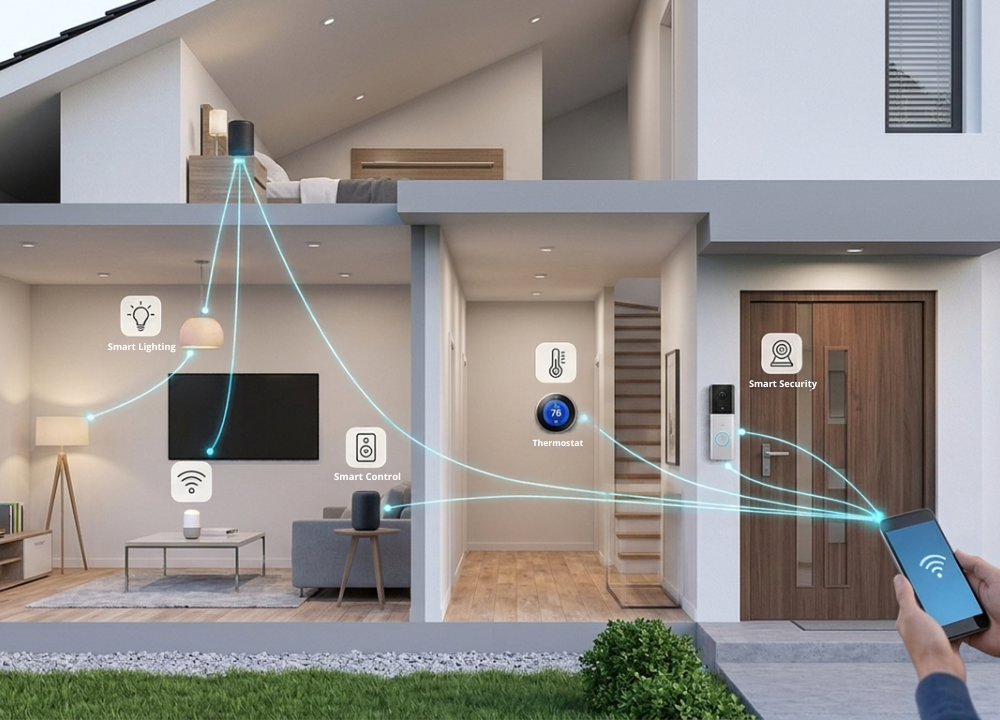
In a smart home, the devices are connected to the Internet and to each other. You can run them from your phone, ask them out loud or let them do their thing.
The smart bulb is a device. But when your lights, locks and heating work together, you have a system working for you.
Most houses are in the middle right now. They have some clever things that never learned to talk to each other.
The whole idea is to close that gap. There was no magic in one device, but in how they work together.
The Main Types of Smart Home Devices
Smart home gear is way more than speakers and bulbs. The possibilities click once you see the full range.
Most houses begin with these categories:
- Voice-activated smart speakers and displays that do things.
- Smart thermostats for heating and cooling.
- Smart lights and plugs that you can control or schedule.
- Smart locks and video doorbells for the front door.
- Cameras, motion, and door or window sensors.
- Leak, smoke, and carbon monoxide detectors.
Beyond these, robot vacuums, smart blinds, and connected appliances are growing fast. You can add as many or as few as you like.
How Smart Devices Actually Connect?
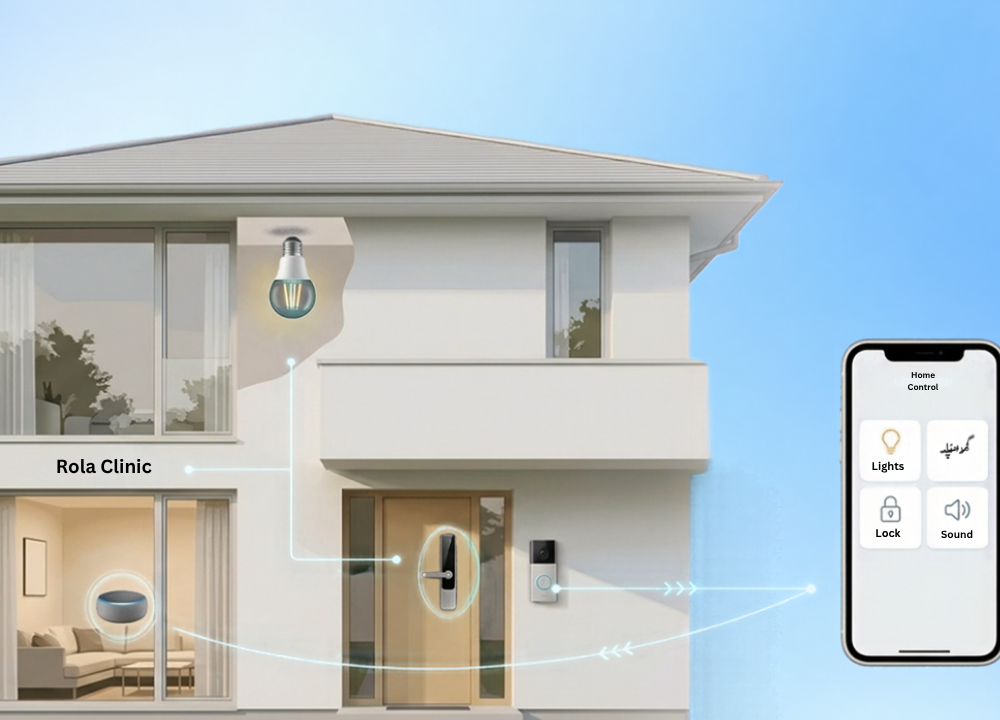
All these devices need a way to talk, and that’s where the tech gets quietly clever. Most use your home Wi-Fi, Bluetooth, or a low-power signal like Zigbee, Z-Wave, or Thread.
Low-power signals matter for battery devices. They sip energy, so a door sensor can run a year or more on a single battery.
Some setups use a hub, a small box that ties these signals together. Others connect straight to Wi-Fi and skip the hub entirely.
For years, brands didn’t play nicely together. A lock built for one app often refused to work with another.
A shared standard called Matter is fixing that. It lets certified devices from different brands work in the same app, which we’ll come back to later.
Why Are Smart Homes Becoming the New Normal?
This is no longer a niche for tech fans. In the US, about half of households now use at least one smart device, and that number keeps climbing.
Prices are a big reason. Industry data from the Consumer Technology Association shows average device prices have dropped about 22% since 2021.
People rarely stop at one, either. The typical US smart home runs around six connected devices, and worldwide shipments are nearing 1.25 billion units in 2026.
Younger buyers lead the way. Surveys have found that the large majority of Gen Z and Millennials already own at least one smart device.
The market reflects all this. Estimates for the global smart home market in 2026 range from roughly $96 billion to $164 billion, depending on how you count.
How Smart Homes Are Changing Daily Life?
The change rarely arrives with fireworks. It shows up in small, ordinary moments instead.
Lights greet you at the door, a room is already the right temperature, and the lock clicks shut on its own. Add these up, and you get real time back each week.
Mornings That Run Themselves
Picture your morning running without you. The coffee starts, the blinds rise, and the bathroom warms before your alarm finishes.
Once it’s set, none of it needs a tap. A sensor, a set time, or your phone leaving the house pulls the trigger, and the chain fires.
The coffee isn’t the point. The win is the dozen tiny decisions made for you before you’re even awake.
Less Worry, More Free Time
The finest benefit is one you can’t see. A connected home lifts the constant background worry.
You stop asking if you locked up or left the iron on. The house knows, and a glance at your phone settles it.
Over a week, that means fewer distractions and a calmer head. It’s less about luxury and more about breathing room.
Do Smart Homes Really Save Money?
Smart homes cost money upfront, so the fair question is whether they pay you back. In many cases, they do, in three separate ways.
The savings come from lower energy use, insurance rebates, and saved damage. Here’s how each one adds up.
Lower Energy Bills
Smart thermostats learn when your home is vacant and scale back the heating and cooling. ENERGY STAR estimates a certified model can save roughly 8% on those bills, often $50 or more a year.
Lighting helps too. LED bulbs consume around 75% less energy than outdated incandescent ones, according to the US Department of Energy, and smart controls switch them off automatically.
Smart plugs decrease the standby power that idle gadgets squander overnight. Add solar panels and a battery, and you can store inexpensive power for pricey peak hours.
Insurance Discounts
Insurers reward gadgets that minimize risk. Many offer discounts for monitored security systems, water leak sensors, and smart smoke alarms.
These discounts often land around 5% to 15%, though they vary by company and state. Convenience gadgets like smart bulbs usually don’t qualify.
It’s worth a quick call to your insurer. A device you were buying anyway might also trim your premium.
Preventing Costly Damage
That’s the savings people overlook. Cheap sensors can prevent a disaster before it starts.
Water damage is one of the most common and costly home insurance claims. One leak can easily cost you over $10,000 when you factor in the drywall, flooring and mould remediation.
Early detection is possible with a leak sensor near a water heater or washing machine. According to the US Environmental Protection Agency, household leaks waste nearly 900 billion gallons of water a year, so early alerts help your bill and the planet.
Home Security That Never Sleeps
A locked door is only useful if you remember to lock it. Smart locks solve that by locking up as soon as everyone has left.
And then there are cameras and sensors. They stream video to your phone, so you can see a porch thief or stray cat in action.
- A few tools do the heavy lifting.
- Talk to visitors from anywhere with video doorbells.
- Window sensors tell you right away if a pane is pried.
- Smart locks give guests or crews temporary access.
- Motion lights startle intruders before they reach the door.
These don’t replace good judgment. But they hand you a live view of home, wherever you happen to be.
Security and monitoring gear now makes up more than a quarter of all smart home devices shipped. That alone shows how much people value the peace of mind.
Smart Homes and Aging in Place
This is where smart homes get genuinely moving. For older adults, the right setup can mean staying independent for years longer.
Fall-detection sensors and wearable alerts reach family the moment something goes wrong, often faster than a neighbour could. Research from Fortune Business Insights points to remote monitoring and connected emergency tools as a fast-growing part of in-home elder care.
Medication reminders sound small, yet missed doses send many seniors to the hospital. A pill dispenser that flashes and chimes helps close that gap.
Voice assistants let someone call for help or switch off a stove without reaching for anything. For families living far apart, that lifts a weight they’ve carried for years.
Even insurers and doctors are taking note. Fewer emergencies and longer independence both lower long-term costs.
How AI and Voice Assistants Make Homes Smarter?
Voice control started as a party trick you showed off once and forgot. The AI behind it has come a long way since.
These systems don’t just take orders now. They spot patterns, predict what you’ll need, and adjust before you ask.
Learning Your Habits Over Time
A thermostat that keeps you cooler on weeknights isn’t guessing. It has read months of your small tweaks and built a picture of how you live.
The same learning shows up in your lights, music, and even food through a connected fridge. Each device learns your rhythm, then acts on it.
That saves real time, yet it raises a fair question. How much should your house know about you?
Hands-Free Living Through Voice
Think of cooking with sticky hands or holding a sleeping baby. Switches and screens suddenly feel impossible.
One speech can dim the lights, lock every door, or check if the oven is off. For people with restricted mobility, that turns an average house into an accessible one.
Assistants have also learned to handle follow-up questions and half-finished thoughts. Talking to one feels less like typing and more like a casual chat.
The Challenges That Come With Convenience
Now the honest part, because none of this comes free. Convenience always carries trade-offs.
Privacy leads the list. Security firms NETGEAR and Bitdefender report that a typical connected home faces close to 30 attempted attacks a day, and always-on mics and cloud cameras widen the target.
Setup can frustrate you fast. Fiddly installs are why so many devices end up half-configured in a drawer.
Cost still keeps families out. Surveys have found more than half of people who skip smart tech point to price as the main reason.
Then there’s the internet itself. When the connection drops, a house full of smart gear can feel more helpless than a plain one.
How to Start Building a Smart Home?
Feeling behind? Don’t be. You don’t need to wire the whole house at once.
Pick one problem to solve, get comfortable, then grow. This simple order keeps cost and confusion low:
- Choose one main app or assistant to build around.
- Start with a high-value device like a thermostat or lock.
- Look for the Matter logo so brands work together.
- Add cameras or sensors once the basics run smoothly.
- Lock down your Wi-Fi with a strong, unique password.
- Set a few simple routines before buying more.
Going slow has a hidden perk. You discover what you actually use, and a few good decisions usually beat a home full of devices.
What the Future of Smart Homes Looks Like?
Here’s where it’s all heading, and it isn’t toward more gadgets on a shelf. It’s toward gadgets that finally function together.
Shared standards are making that real. The Connectivity Standards Alliance has enlarged its Matter standard to incorporate appliances and home energy systems, and its newest version, Matter 1.6, focuses on quicker setup and smoother coordination between businesses.
Health monitoring embedded into daily fixtures is next. Mirrors that indicate early signs of disease and floors that feel a fall already exist in limited testing.
Adoption keeps climbing every year, and linked gadgets are on course to reach most homes soon. The change you’ll feel most is a quiet one.
Your house ceases being a machine you manage and starts acting like a partner in your day.
Conclusion
Strip away the hoopla, and smart home technology impacts life in simple, human ways. It saves your mornings, lowers your bills, defends your door, and lets loved ones stay independent longer. The power isn’t in any one device, but in how they work as a team.
There are also actual trade-offs. Privacy, setup, cost and reliance on the internet are all things to consider before you join in.
One more indicator of how common this is now: Edison Research says smart speakers are in around a third of US homes. What started as a novelty has become a staple in the home, with many taking the first steps into a fully connected home.