
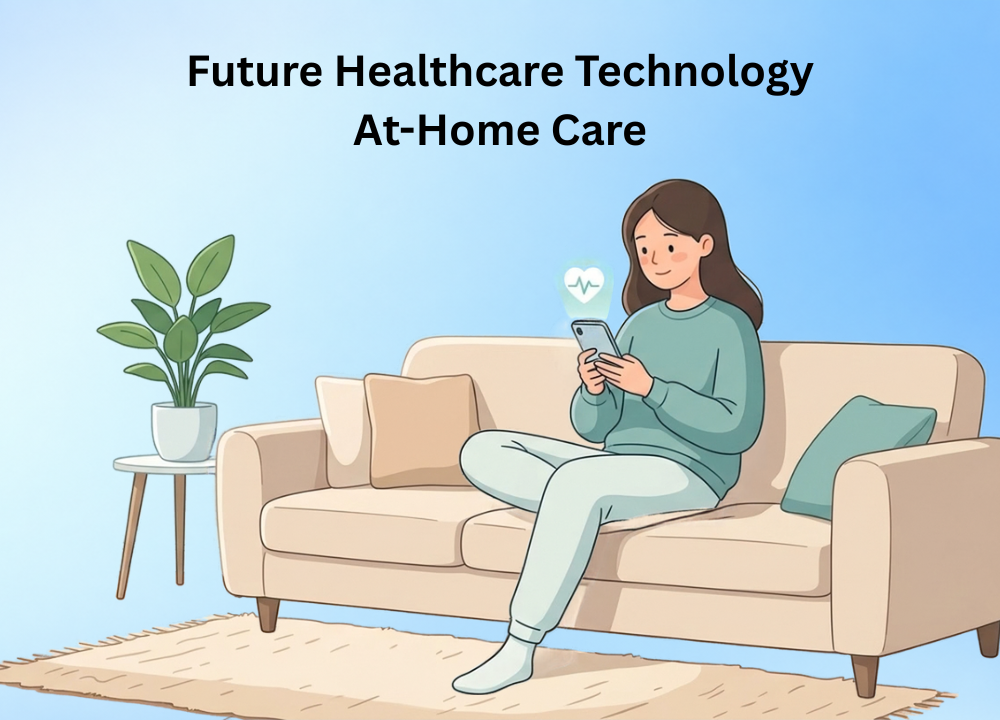
How Future Healthcare Technology Is Elevating At-Home Care
Sick meant a hospital bed, a plastic wristband, and a long wait for someone in scrubs to come and look after you. That picture is disintegrating, slowly.
More families want their loved one to get well at home, with familiar faces, not stuck in a ward across town. The problem is reliability. Can a house really do what a hospital does?
It’s a valid question. A patient alone can miss the subtle warning indications that a professional nurse would see in a matter of seconds.
Don’t count the gap, and the little things build up rapidly. Another missed pill, another unnoticed fall, another fever no one detected until it became an ambulance ride.
This is exactly the space where modern healthcare technology has moved into. Sensors that can read how you walk. Programs that give a hospital the ability to take a full admission from a person’s living room.
Home care is being reconstructed from the ground up. Here’s how that transition is really happening, sector by sector, with the facts to prove it’s real and not just hype.
Why At-Home Care Is Becoming the New Front Line of Healthcare
Home care is no longer the watered-down version of the hospital. It’s a category of its own now, and there’s a lot of money being staked on it.
In 2025, CMS predictions published in Health Affairs show a faster 10.3% increase in national home health spending, followed by a 7.9% increase in 2026. The same forecast projected the cost will grow to nearly $367.8 billion by 2034 as more baby boomers mature into greater care demands.
The pull is primarily cost-driven. A big study in JAMA Internal Medicine in 2019 looking at more than 17 million Medicare hospitalizations found individuals sent home to recover cost about $4,514 less over 60 days than those who stayed in a skilled nursing facility.
Another reason is the coziness. Older people often sleep better and recover faster in their own bed, apart from the constant beeping and movement of a hospital ward.
Add money to comfort, and you have a system that deliberately pushes real, serious care into the house. Not just beautiful little check-ups but the kind of care that used to require hospitalization.
Remote Patient Monitoring Is Turning Homes Into Mini Clinics
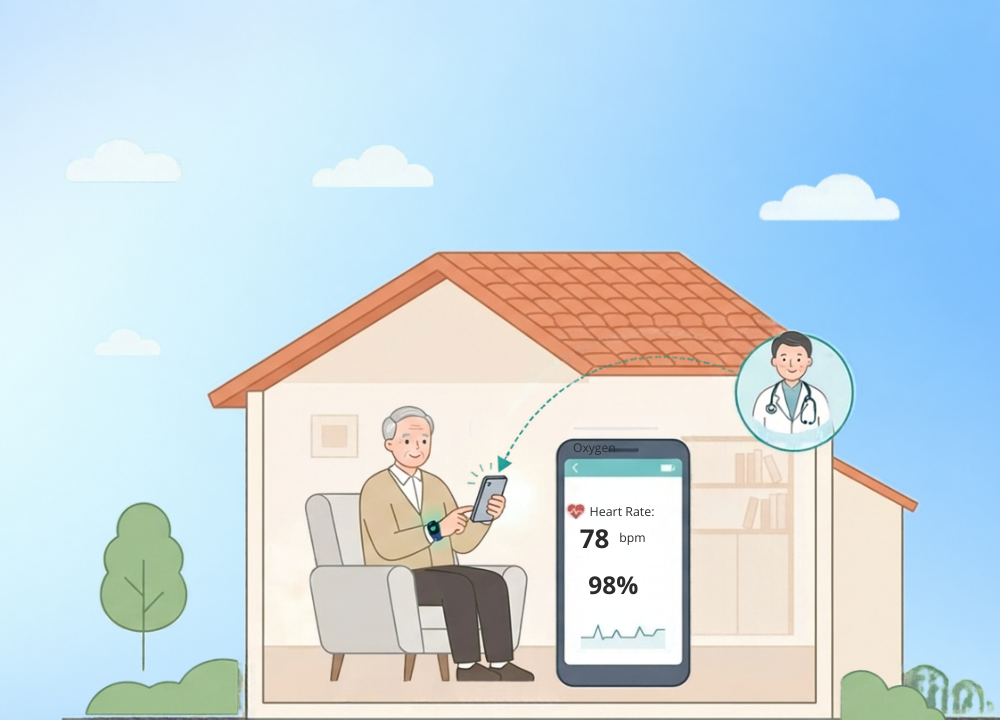
Remote patient monitoring (RPM) is when a care team monitors a patient’s vital signs when not in the same room. A device collects the readings and streams them immediately to a clinician’s dashboard.
Until recently, this was a side tool for a handful of chronic patients. Now it’s central to how organizations keep individuals steady between visits.
Adoption is expanding. The market report by SNS Insider says 89% of healthcare systems have implemented some sort of AI-powered remote monitoring in their operations due to the aging populations and the enormous burden of chronic disease.
Wearables That Track Far More Than Steps
The original fitness bands tracked steps and not much else. The wearables under development today for home care gather a far more complex array of information from the body.
Sensors for the heart rhythm that can sense an irregular heartbeat before it becomes dangerous
Blood oxygen monitors for individuals recovering from lung or heart disorders.
Glucose sensors that don’t need diabetics to stick their finger all the time.
Early signs of worsening or impending infection: movement and sleep monitors.
These aren’t gadgets looking for novelty. They cut down the period between when an issue starts and when anybody sees it.
And it’s good for the bottom line too.” A 2025 study on Medicare payments for over 6,000 patients in 15 states indicated that remote monitoring plus clinical follow-up lowered the total cost of care by around $1,302 a year per patient. It also reduced hospital stay by 27%.
That’s the kind of result that keeps insurers pushing these gadgets farther and deeper into routine care.
Smart Sensors That Watch Without Being Worn
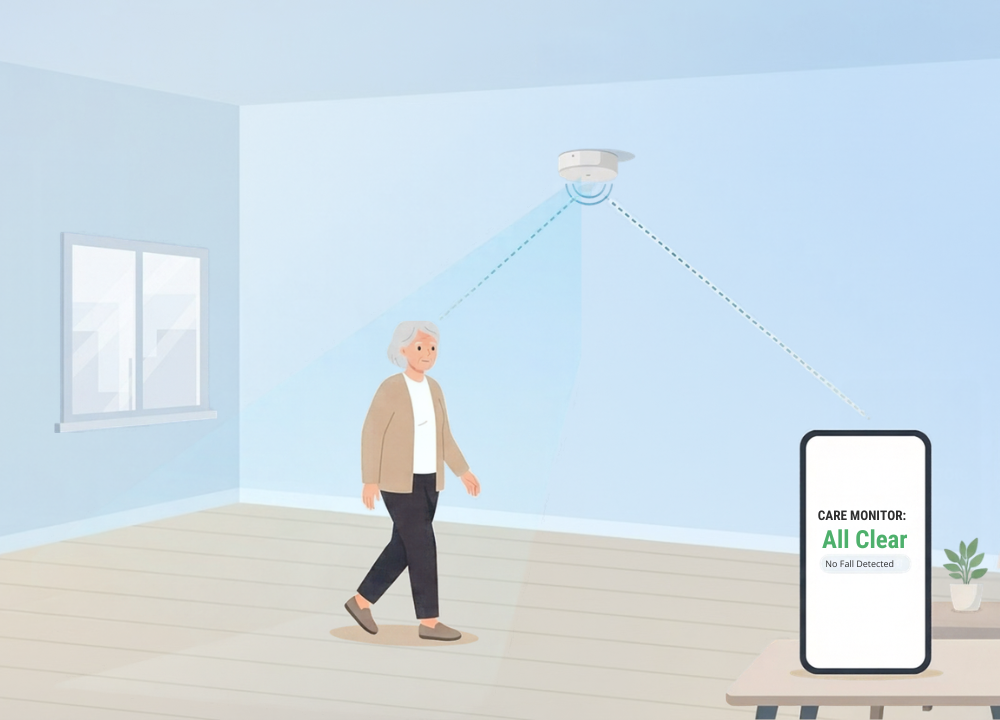
Not every patient will remember to put something on every day. Many older people with memory impairment simply forget. And this is where ambient, passive sensors come in to softly pull their weight.
The tools are in the room And they read motion Or sound Or regular routine. They don’t contact the skin, yet they sense things that are worth a second look.
If you abruptly wake up in the night to go to the bathroom, it is a sign of dehydration or the beginning of an infection. “Ambient systems would flag patterns like these days before a scheduled visit.”
Dignity is the appeal. Because the safety net is there, but you can’t see it because the individual is independent and their privacy is respected.
Artificial Intelligence Is Becoming the Caregiver’s Quiet Assistant
AI is not frequently talked about in home care talks, yet it is under pretty much every tool presented thus far. Its main purpose is to extract the signal from the noise.
Without it, a nurse would be overwhelmed with warnings from every movement, cough, and shuffle across the floor from one monitoring gadget. It does come to a human, but only of really important occurrences.
Quietly, that filtering job has become one of the most valuable features of the whole system. The doctor who gets bored of phantom sirens is the doctor who misses the real emergency.”
AI Fall Detection That Cuts Through False Alarms
Falling is one of the greatest hazards to elderly adults living independently. More than 14 million seniors fall each year, or one in four, according to fall data from the CDC. Falls are the leading cause of death from injury for people age 65 and over.
In 2024 alone, the National Safety Council reported that 43,020 falls were deadly among individuals 65 and older, according to official data. Tragedies like this are not uncommon. They are a daily ritual across the country.
In some ways, older alert buttons made things worse. They’d yell if someone sat down too quickly, and families would lose faith in them.
Modern systems look at body angle and the pace of a movement, not just sudden motion. That one change made a major difference in whether people actually kept the gadget on.
Teaching a Machine the Difference Between a Chore and a Crash
Now computers trained on real movement data can tell the difference between a real fall and someone kneeling down to do laundry. Studies on multi-sensor fall detection systems have demonstrated that they are able to differentiate a true fall from everyday regular activities with an accuracy of about 95%.
Now camera-based gadgets have come into play, monitoring corridors and common areas without any wearables whatsoever. The combination of sensors, cameras, and wearables is now seen by many senior housing operators as a necessity, not a luxury.
That means less false alerts to take caregivers away from real concerns, and older adults who feel cared for, not monitored every second. The idea in general is balance: safety without suffocation.
Predictive Alerts Before a Crisis Even Hits
The newest layer of AI does more than just find problems. It attempts to see them approaching.
Small changes in sleep, heart rate, or activity are an early warning indication of a decline days before there is an obvious symptom. The care team that picks up that early signal can call the patient, switch a medication, or arrange a visit before a small problem becomes a huge one.
One phone call at the appropriate time can stop a whole sequence of painful and expensive events. That’s prevention, doing its modest, unglamorous work, where perhaps the greatest gains still lie.
Hospital-at-Home Programs Are Rewriting What Admission Means
The most radical shift in the entire field is the advent of hospital at home programs. These enable a patient to receive true hospital-level treatment, IV meds, daily nurse visits, live vitals, all from the comfort of the home.
By January 2026, federal approval had been granted to about 373 hospitals in 140 health systems in 37 states to run these programs. That footprint has grown steadily since the model’s epidemic-era start in late 2020.
The program practically came to a standstill. There was a brief lapse in the federal waiver that backs it up during a government shutdown, but Congress stepped in.
The Consolidated Appropriations Act of 2026, signed into law in February, extended the waiver through September 30, 2030. That gives hospitals a real runway to grow these programs out instead of rebuilding them every few months,” he said.
Results so far are looking positive. A federal report to Congress found hospital-at-home patients had a lower death rate in all of the top 25 diagnosis groups studied, and fewer hospital-acquired infections.
These findings were corroborated by a subsequent peer-reviewed study of Medicare patients that found home-based acute care was associated with lower in-hospital mortality and fewer emergency visits within 30 days of discharge. Doctors also claim a familiar benefit. Older patients at home avoid the confusion and muscle loss often associated with prolonged hospitalization.
Telehealth Keeps a Doctor Only a Video Call Away
Telehealth exploded during the pandemic and never really shrank back. “It’s the easiest way that technology brings a clinic into someone’s living room.”
Basic video visits now take the place of medication reviews and therapy sessions, and follow-up visits that earlier needed a travel across town. Many times, that convenience is what decides if a patient with limited mobility gets care or no care at all.
AI is starting to add on top of these calls now too. Some platforms execute a fast automated check at the beginning of the visit to flag symptoms that could need a closer look, so the doctor’s minutes are well spent.
The move is largely a boon for patients in remote areas. An expert who used to be three hours away is now a short wait in a virtual waiting room.
Robotics and Smart Home Tools Are Filling the Caregiver Gap
Staffing shortages have been especially severe in home care, and the math behind them is simple. Home health and personal care aide jobs are predicted to grow by 21% from 2023 to 2033, seven times the average for all jobs, the U.S. Bureau of Labor Statistics said.
Workforce group PHI, however, estimates the sector will need to fill about 9.6 million direct-care vacancies between 2025 and 2035. Technology can’t replace the warmth of a caregiver, but it can reach a whole lot further into too few hands.
Smart home devices now silently do jobs that used to require a person to be in the room. This allows the human caregiver to focus on those parts of care that a machine just could not do.
Companion Robots for Everyday Support
Simple robotic companions can remind a patient to extend their legs, prompt a memory exercise, or offer a pleasant check-in on a lonely afternoon. Some versions even ping a family member when daily routine abruptly changes.
They work best as an add-on, not a replacement. Loneliness is real for older people, and no artificial voice can substitute a visit from someone who loves you.
But between visits from humans, in the long gaps, a little presence is better than nothing. The promise here is a plain and moderate one.
Voice Assistants and Medication Reminders
Voice-controlled speakers bring smart home care to your fingertips. A spoken prompt to take a tablet, combined with a smart pillbox that records whether the lid has been opened, lowers missed doses like sticky notes never could.
Said appointments and reminders of medication and fluid intake.
Smart pill dispensers that alert a caregiver if a dose has been missed.
Automatic lights to reduce fall danger at nite on the way to the bathroom.
A single voice command can initiate video conferences for patients who are isolated.
The patient need not have any technical skill for any of them. This is incredibly important for senior folks who never grew up with screens and don’t want to start now.
What This Means for Patients and Families Going Forward
In the next few years, home care will be more like an always-on, connected safety net than a brief hospital visit. Sensors, AI, and remote teams will operate in the background, mostly unseen;
But don’t believe that means we won’t need human caregivers. It frees caretakers from having to do frequent inspections, so they can focus their attention on the areas of care where a human is really needed.
If you are considering home care services, there is one question that you should ask each provider. Which AI support do you really use for monitoring?
The gap between hospital-level safety and home-level comfort narrows further. It turns off one gadget, one data point, one emergency diverted at a time.
Pingback: How Smart Home Technology Will Change Lives? - Tech Journey Flow
Pingback: How to Monitor Home Remotely with Smart Technology in 2026? - Tech Journey Flow