
You’ve likely heard the term in a doctor’s office, in a job posting, or in a news piece about a hospital data breach. It sounds too technical, and most explanations don’t help with that perception.
There are just way too many rules out there that throw about words like ‘interoperability’ and ‘meaningful usage’ without actually ever defining what they mean. The jargon is secondary to the message.
That space makes a change; it’s more than it seems. Today, health information technology touches everything from how your drugs are filled to how your test results are conveyed to your doctor, to how quickly a hospital can spot a deadly drug combination.
If you don’t know the basics, it gets hard to evaluate things that have a direct effect on you. Is Your Data Safe In The Hospital’s Digital System? Do you even have a work title in this area?
We’ll take the mystery out of the phrase in this tutorial. It tells the history of the field, discusses every major piece, and talks straight about the benefits and risks.
What Health Information Technology Actually Means
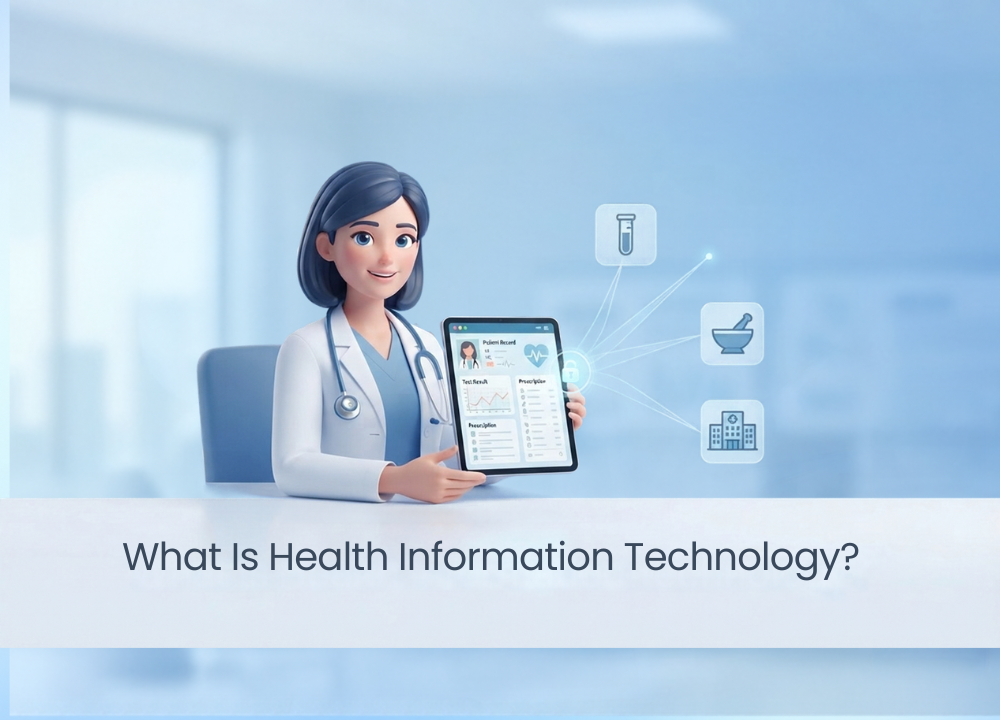
Health IT or HIT is using computers to store, organize, and share medical information. That is the whole idea in one sentence.
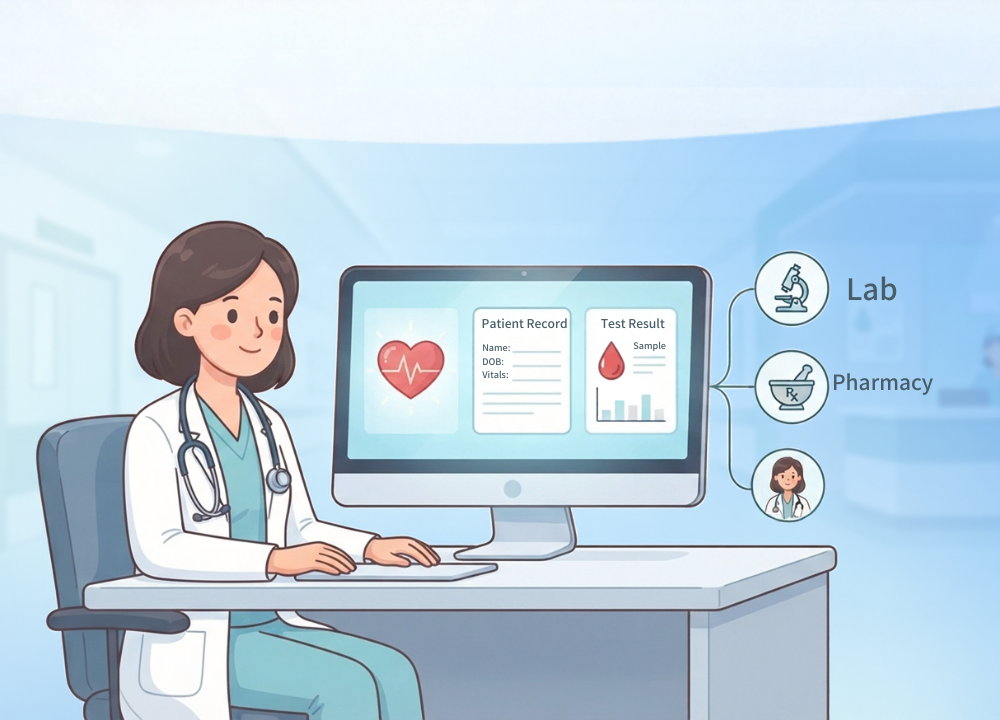
But it goes far beyond computerized patient charts. It includes software, technology, and networks that enable a clinic, a lab, a pharmacy, and an insurer to talk about the same patient.
Think of the old way. Paper folders crammed in filing cabinets, lab reports faxed, handwritten prescriptions for a pharmacist to decipher by hand.
Health IT alters the entire chain with digital records that can move between systems in seconds, not days. A lot of the guessing and the waiting goes away.
It’s not as if paper is going away. That involves sending the right information to the right person at the right time, whether that person is a surgeon, a nurse, or the patient.
Health IT, Health Informatics, and Digital Health: What Sets Them Apart
Even within health care itself, these three phrases are commonly misunderstood. It would save a lot of confusion to have a clear delineation between the two.
The tools are really health information technology. It is the software, servers, and devices that store medical information and transfer it from place to place.
Health informatics is one step forward. It’s the science of how to use that data best, blending computer science with clinical judgment to improve decisions and outcomes.
Of the three, the widest is digital health. This is an extension to cover fitness trackers, wellness apps, and consumer electronics that don’t touch an official medical record at all.
The difference counts if you are choosing a college program, a job title, or a piece of software. Each term is a somewhat different slice of the same bigger globe.
A Quick Look at How It Started
Long before health IT became a household term, digital health records were being used in limited corners of the sector. It wasn’t a novel notion, but the scale was small.
The real tipping point was 2004. President George W. Bush signed an executive order creating a federal office to lead the nation toward electronic patient records.
That office is the Office of the National Coordinator for Health Information Technology (ONC). The focus is to be the leader in the conversion of paper charts to digital charts across the health care system. You can read more about the role at HealthIT.gov.
The HITECH Act Changed Everything
Five years later came the bigger push. The HITECH Act was passed in February 2009 as part of a wider economic stimulus package. It provided actual money to providers to embrace electronic health records.
Progress was crawling before that law. In 2011, just approximately 28% of hospitals had an EHR, and most treatment still operated on paper and fax machines.
Money incentives changed that picture in a hurry. Adoption increased sharply in the 2010s, driven by the rewards and later penalties for non-compliance.
The bill also established an ambitious goal of having every American under an electronic health record by 2014. That deadline was missed, but the course it took was never changed.
The Main Types of Health Information Technology
Health IT is not a single instrument. It’s a complete family of systems, each one designed to solve a different piece of the issue.
Some of them are record storage specialists. Some work transferring the data between companies, or assisting a clinician to make a safer call at the bedside.
When you look at the individual pieces, it is much easier to understand how a hospital’s digital system all works together. Below are the parts you are most likely to encounter.
Electronic Health Records (EHR)
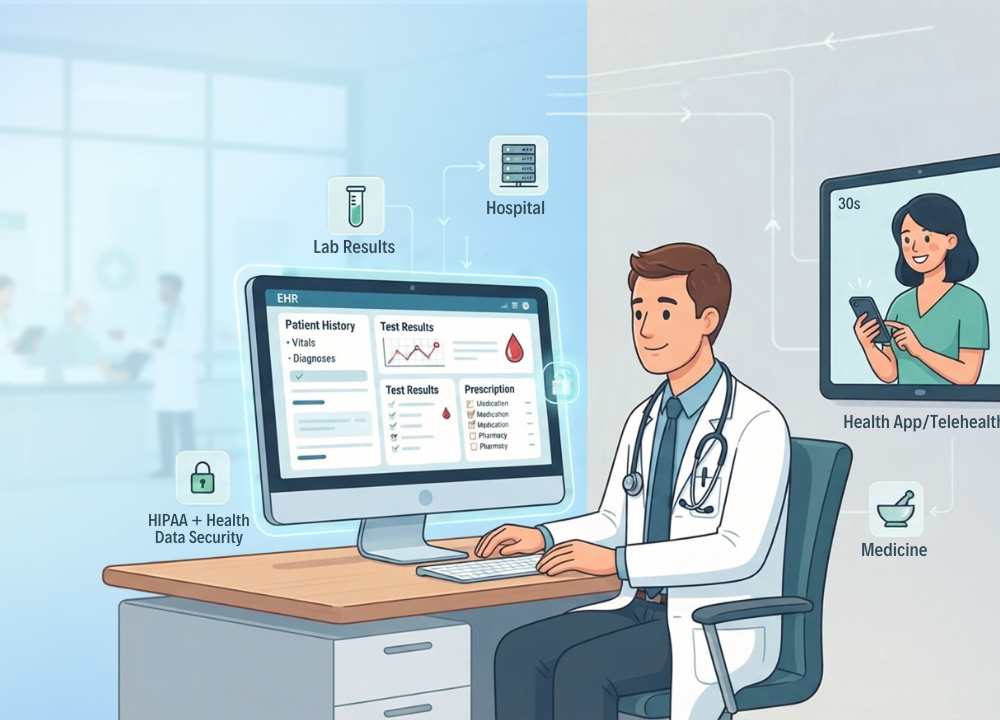
An electronic health record is the digital representation of a patient’s complete medical history, maintained and updated within a clinic or hospital’s own system. It’s the backbone that everything else ties to.
It keeps diagnoses, prescriptions, allergies, lab results, and visit notes in one place. And any authorized staff member can pull it up on the spot instead of rummaging through paper.
The adoption of just one tool has been astounding. The Office of the National Coordinator reported that more than 99% of non-federal acute care hospitals had adopted a certified EHR by 2024, up from less than 10% in 2008.
Telehealth and Remote Care Tools
Telehealth encompasses video visits, remote monitoring devices, and mobile apps that connect patients with providers without traveling to the clinic. It bridges the gap between the two.
This branch was the fastest-growing during the epidemic years. It has remained a lasting feature of care, not a transient fix, unlike many epidemic practices.
There are heart rhythm and blood sugar trackers here, too. They give readings right back to a medical provider, potentially spotting an issue before it shows symptoms.
Health Information Exchanges (HIE)
The health information exchange is the network layer that allows different entities to securely communicate patient data. Think about a hospital and an outside lab exchanging records.
Without that part, an EHR would be a stand-alone island. The patient’s history would be locked in the building that generated it.
Real gains have been made here by hospitals. Engagement across all four types of electronic data exchange jumped from 46% to 70% in 2023. It’s a steady, albeit bumpy, march toward full connectivity.
Clinical Decision Support Systems
These tools sit in the background of an EHR, quietly looking for problems that a busy clinician could miss. They act as a second set of eyes that never get tired.
They flag drug interactions, remind a doctor of an overdue test, or draw attention to a strange lab value before it falls between the cracks.
It’s like a safety net built in. It attempts to catch human error before it ever gets to the patient.
Patient Portals and Personal Health Records
A patient portal is the window that enables you to examine your own chart, message your clinician, and request refills online. It places your record within reach instead of behind a front desk.
This technology transferred actual control back toward patients. Information that once required a phone call now sits a login away.
Some people go further and keep a personal health record of their own. They pull data from numerous vendors into a single app they totally control.
Data Standards That Hold Everything Together
None of the technologies above would collaborate without universal guidelines for formatting data. Those regulations are what technical standards provide.
FHIR, short for Fast Healthcare Interoperability Resources, is the leading standard today. It provides a consistent language to describe a test result, a diagnosis, or a drug for every system.
Two hospitals running on different software would struggle to read each other’s data without a common standard. They may both be completely digital, yet still hardly comprehend each other.
Who Actually Relies on Health Information Technology
It’s easy to think health IT is solely for doctors and nurses. And that’s just the beginning of the litany of people who lean on it every day.
Common users are:
Doctors and nurses with fast access to a patient’s whole history.
Pharmacists who review prescriptions for known allergies and interactions.
Insurance firms that deal with claims in common electronic formats.
Public health agencies that use common reporting systems to track disease outbreaks.
Scientists who analyze vast volumes of anonymised data to discover novel treatments.
Now patients can examine their own results and message their care team directly.
Different groups interact with different layers of the same system. That overlap is precisely why seamless data communication between them is so critical.
How Hospitals and Clinics Use It Every Day
You don’t have to look far at a modern hospital to see health IT in almost every step of a visit, often without the patient even realizing it. Like plumbing, it flows. Invisible, yet necessary.
A nurse checks in a patient on a tablet that pulls up their whole history in seconds, with allergies highlighted in glaring red. Then the doctor electronically orders a prescription, and the system promptly verifies it against everything else the patient is taking.
Common daily uses are below:
Arrange appointments and dispatch automatic reminder texts.
Lab results are stored so specialists can see them all at once.
Standardized electronic billing to insurance.
Following immunization records between clinics and pharmacies.
Notifying workers when a patient is due for screening.
All of these were formerly phone calls, paperwork, and a lot of waiting. Most of it now occurs behind the scenes, out of sight of the patient yet vital to their treatment.
The Rules That Govern Health IT
In the United States, nearly everything in health IT is governed by two federal statutes. It all makes sense when you know how they’re different.
HIPAA, passed in 1996, specified the minimum guidelines for who can access a patient’s health information and what constitutes a violation. It’s the base all else is built upon.
And then HITECH, the 2009 law we referenced before, just piled right on top of HIPAA. It toughened punishments and set a strict duty to report violations promptly.
What Happens When Data Is Breached
Now, federal guidelines require any organization that loses control of data impacting 500 or more people to report it. That report goes to the government, to the media, to every person it affects.
There’s a harsh explanation for that necessity. Digital breaches are now regular enough to warrant this level of public accountability.
And states typically add their own privacy restrictions on top. That patchwork is why large health systems have entire compliance teams whose sole job is to keep track of it all.
Benefits of Health Information Technology
The case for health IT is based on a basic idea. Better information results in better judgments, and better decisions lead to safer patients.
The benefits are both in speed and accuracy. In a hospital, minutes count, and having quick access to a complete history can make a difference in an emergency situation.
Major benefits include:
Quicker access to a patient’s comprehensive history when every minute matters.
Automatic Interaction Checks Decrease Medication Errors.
Less duplication of testing with immediate findings traveling between providers.
Improved coordination when a patient is seen by numerous specialists.
Easier to track public health trends, such as flu outbreaks.
Patients also receive something real. Now many may enter into a portal, see their own lab results, message their doctor, and seek refills without a single phone call.
Challenges and Risks Worth Knowing
There are no free lunches hereabouts. If you’re learning about health IT, be sure to understand the disadvantages as clearly as the upsides.
Privacy is the most important. Data flowing through dozens of systems has many more opportunities for a breach than a locked filing cabinet ever could.
Other real challenges are:
Systems from different suppliers that nevertheless have a hard time swapping data cleanly.
Smaller, under-resourced clinics face challenges with adoption due to training shortfalls.
High initial expenditures associated with hardware, software, and ongoing support.
Alert fatigue, where too many warnings cause personnel to tune them out.
The smaller clinics experience these challenges the hardest. Large institutions and urban hospitals do a good job of sharing data, while independent and rural hospitals often lag behind, creating a true digital divide within the same country.
Careers Built Around Health Information Technology
This is not some background event that is happening. It also has its own increasing career path that keeps workers out of direct patient care.
Roles are all over the place. They start as entry-level medical records specialists, sorting and validating data, and work their way up to health information managers, in charge of the data strategy for an entire institution.
What The Job Outlook Looks Like
There is interest; the figures prove it. Employment of health information technicians and medical registrars is projected to expand 15% from 2024 to 2034, far faster than the average for all occupations, which is projected to grow 3%.
The pay is good for the schooling required. In 2024, median wages were approximately $67,000, and most entry points require only an associate’s degree.
Certifications and a bachelor’s degree can open the door to higher-paying, leadership opportunities over time. This is a true middle route for someone who loves computers and healthcare but isn’t a fan of bedside work.
What Comes Next for Health Information Technology
The next chapter is already being written, and artificial intelligence is right at its heart. The rate of change here is very rapid.
By 2024, 31.5% of the hospitals examined in a research study published in the JAMA Network Open in December 2025 were already employing generative AI in their records. Another quarter was to follow in a year’s time.
These tools can start writing clinical notes, summarize a patient’s history in seconds, and identify hazards a physician might overlook during a busy shift. It’s about giving back time to overworked staff.
But there’s a catch, lurking in that same research. Some hospitals are adopting these tools without solid evaluation methods in place, which increases the risk of inaccurate or low-value utilization.
You can also expect the drive for more connection to keep growing. Regulators continue to drive labs, hospitals, and insurers to systems that can talk to each other with no friction.
For patients, that future will likely mean fewer duplicate tests, faster diagnoses, and a health record that actually follows them wherever their treatment goes.
Pingback: How Future Healthcare Technology Is Elevating At Home Care - Tech Journey Flow